
Vegetable growing for beginners: Week 2 May 2026
Yes! We have a comfrey contraption!
The plot after this week’s session. We may be in the ‘hungry gap’ if we didn’t get our planting numbers and sowing dates sorted, but we are also in the dance of the fleece.
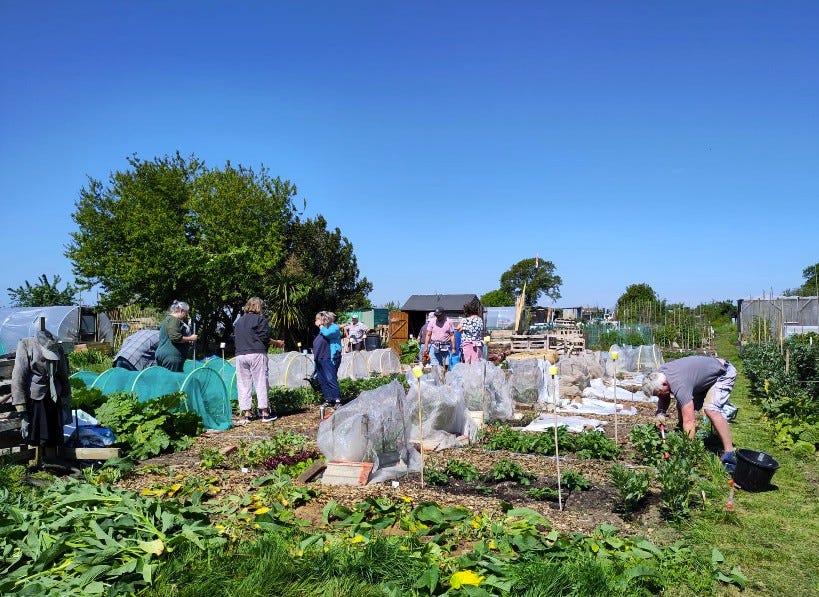
We still have our peas swaddled, but the netting will come off next week. Tonight and tomorrow (10th and 11th of May) we have low night time temperatures and a northerly wind making the temperature feel as if it is 0°C. No plant that has been wrapped up wants to be exposed to that, so one more week it is.
Making teas for our plants
This week we made comfrey and nettle tea, just because they are easy to make and so valuable for plants. I also like the fact that the plants have taken nutrients out of the ground and air and we can return them - a closed loop.
We made comfrey tea both the stinky way and non-stinky. We chopped down all of our comfrey, which is quite a bit, and half of it we stuffed into a water butt, covered with water, weighted the comfrey down with a paving slab and covered it. This will decompose anaerobically and stink until for a few weeks. In 4-6 weeks we can start to use it diluted in a watering can, and as it gets older, dilute it further.
Making it in the water butt means that we can constantly add more water and comfrey and so will never run out.
This tea is potassium rich and so promotes flowers which in a vegetable garden then often means fruit, particularly tomatoes, chillies, peppers and cucumbers meaning that we do not need to buy tomato feed.
A nettle tea can be made in a similar way although just to show that you could make it in different quantites, we made it in a small bucket that has a lid. This is nitrogen rich and is good for stimulating growth and developing pest resistance when plants are looking a bit weak and pale and works well on leafy plants. I have always watered these teas in at the roots but they can be sprayed onto the leaves of plants - I just think the nozzle of the sprayer will clog regularly with the bits that are inevitably floating in the tea.
The non-stinky way to create comfrey juice is to take a down pipe/soil pipe and fix it somewhere, the side of our shed, with a sieve on the bottom and feeding into a bottle or bucket that has a lid. There is a stone attached to the pipe at the top which is dropped down into the pipe to squash all the leaves and hold them down.
This method takes longer but produces a very concentrated feed in small quantities, although you can constantly top up the comfrey in the pipe. Because this is not decomposing in water, it should not smell quite as much.
You can make teas like this with so many plants. Bindweed makes a general feed and is a good use of what is an irritating plant. The Koreans specialise in making teas like this, and will make a teas out of all and any plants. For instance if you want a feed for your strawberry plants, you chop up and steep strawberry plants in water; roots, soil and all, for at least 6 weeks and then start to use it. I do have some of this which I made last year out of extra and old plants and have just started to use it when I water the strawberries. This is called Jadam and you can read more about it here.
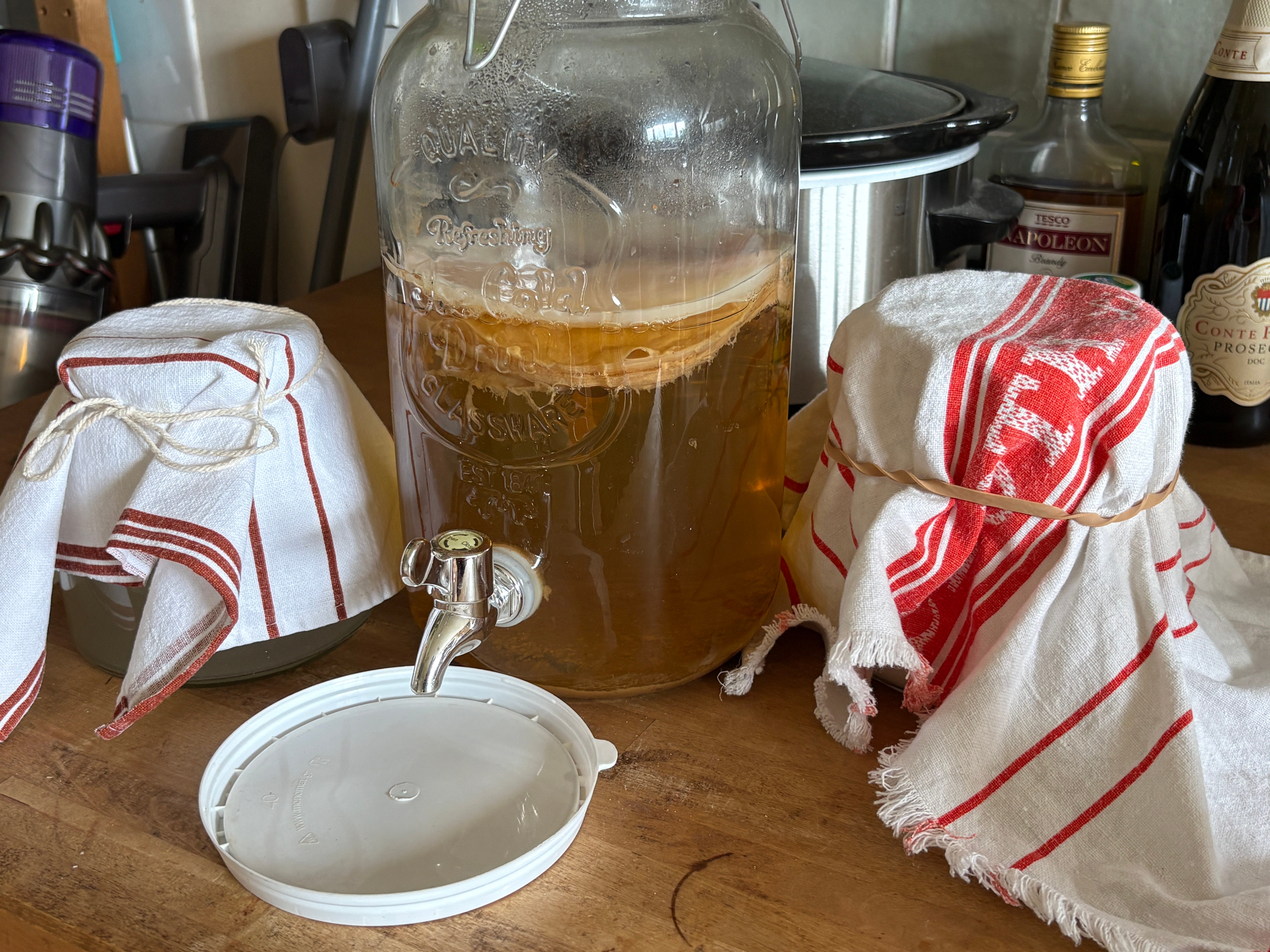
Our next compost making experiment will be in a few weeks time when we will make a super-rich compost with fermented rice water added to increase microbial action. I have started to ferment the rice water. We are no strangers to fermenting, so here is the trio of rice wash water for compost making and kombucha and kefir for us .
Watering
This is something that is really important to get right. This video from Sheffield Made Gardens covers everything we talked about. It does cover pots first but moves onto veg in the garden after that.
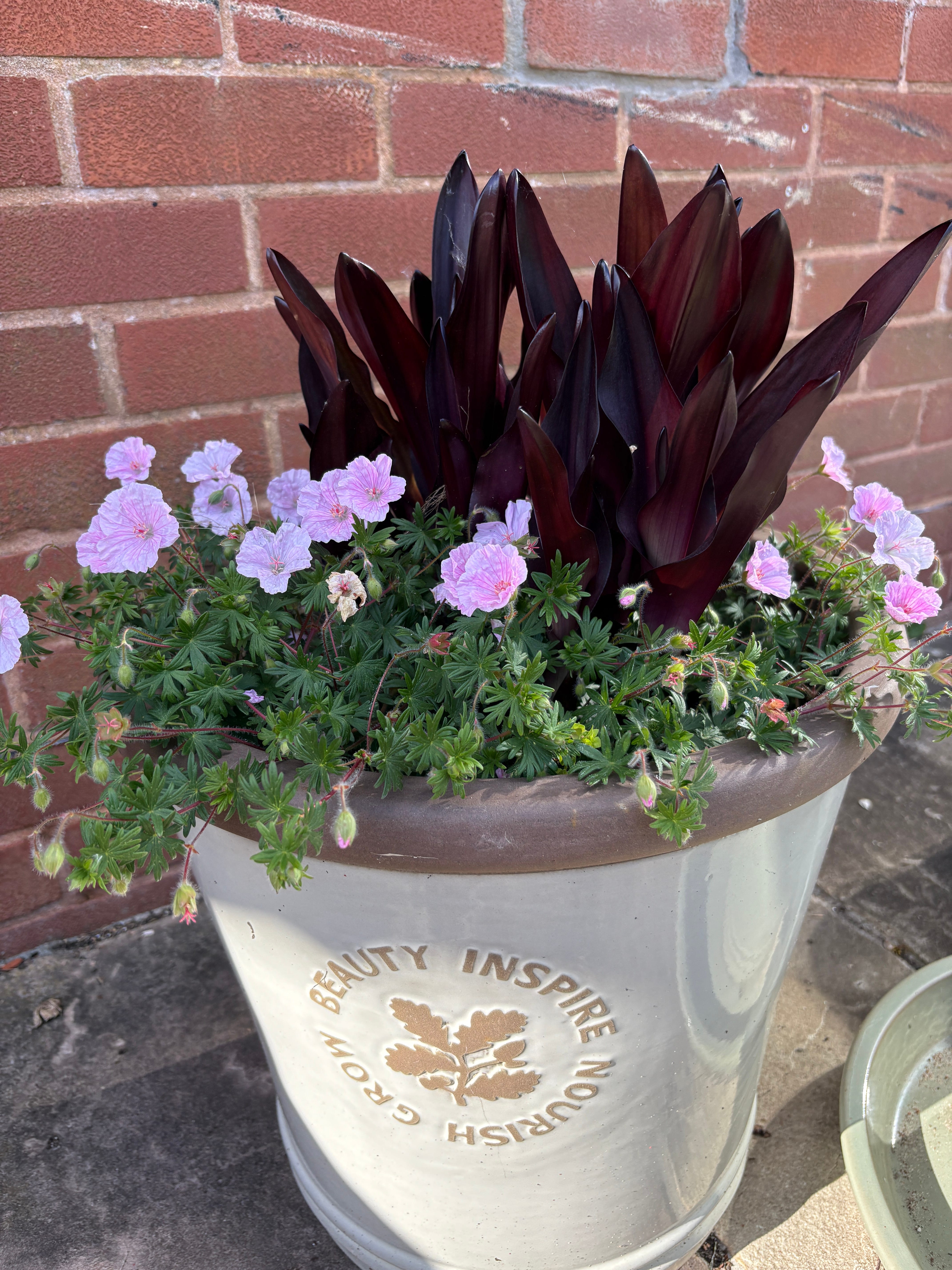
And finally. My favourite pot this week in the garden . . .
Happy gardening.