
Growing vegetables for beginners: May 2026 week 3
Flowering early, watering, harvesting lettuce and second generation tomatoes
The bees are in their dens of pleasure and all is right with this small corner of the world, even if the roses are early this year.


Watering in hot dry weather
I could talk about watering for ever - like a constantly dripping tap - but I won’t. All I will say is that in this warm (read hot) weather with a wind, the plants will find it dessicating. I have a few strawberries that have flopped and do not seem to want to be resuscitated but looking at the forecast, things are going to change.

On wednesday the likelihood of rain is 100% so this weekend is a good one to get plants in the ground but protected from slugs and snails for at least the next week. On the plot where we all grow together, we have used some strulch. Strulch is a luxury not a necessity for us due to its cost but it works well as a barrier around small seedlings. As a mineralised straw, it works as a mulch would do, trapping in moisture and preventing weeds from growing, with the minerals deterring slugs.
Slugs and snails are not our only pests this week; we have blackfly on the broadbeans so more about this in the next newsletter but spray bottles at the ready!
But what to water if time is short? Here we need to prioritise, so plants that we are harvesting or soon will be are the priority. For us that would be the lettuce because we have started to harvest it, and the peas because in order for the pods to swell, they need water and there are some teeny tiny pods visible now.
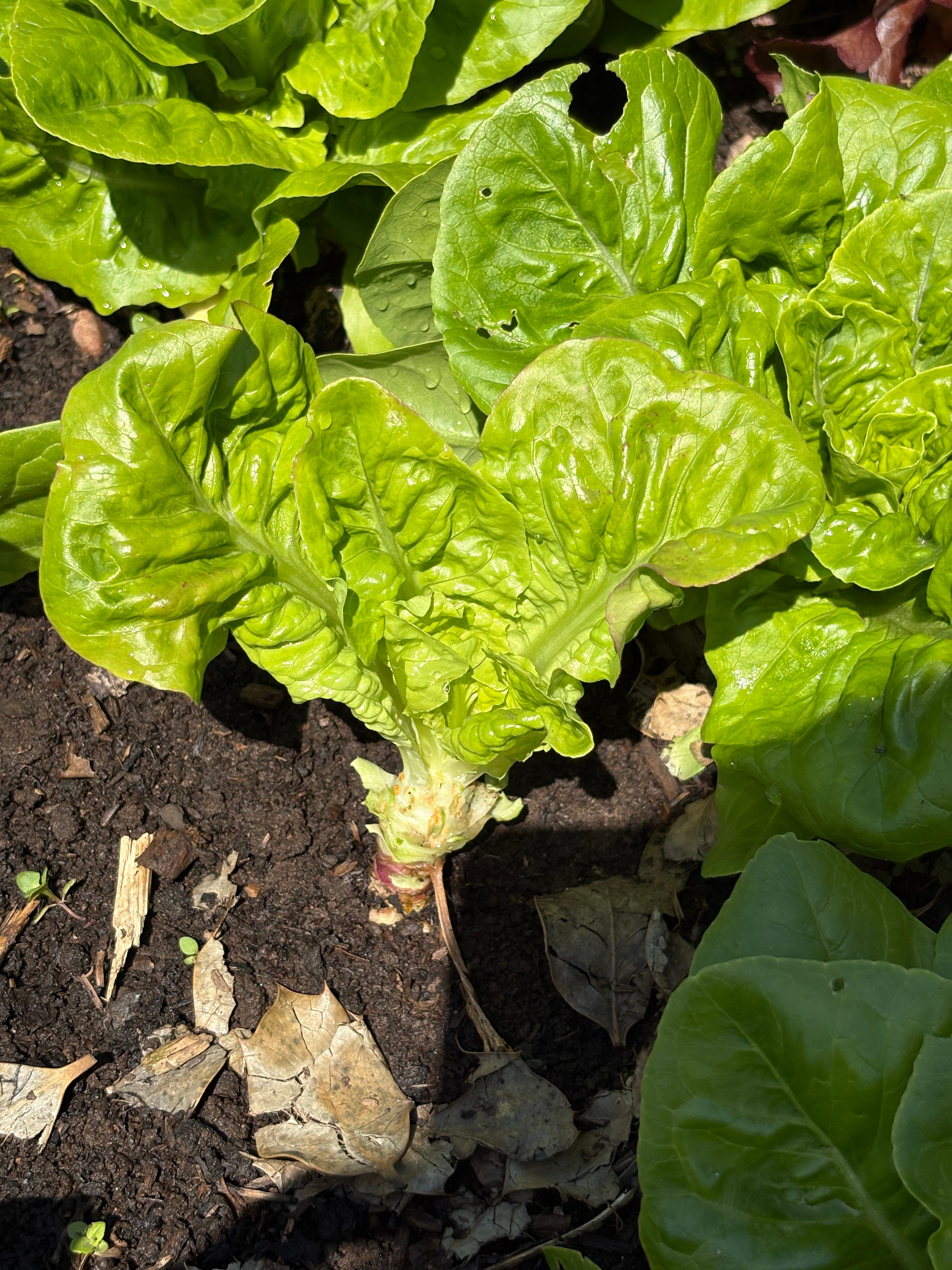
We are picking three of our lettuces down to 4 or 5 leaves and then just a few leaves off each of the other lettuces. This is to see if either method of harvesting gives more or harvests for longer.
I wish we had chosen one person’s produce to weigh to show how much can be grown on two beds 1.2m x 4m (approx). Next year.
Tomatoes
We have started to pinch out the side shoots of our tomatoes. In very simple terms, plants have growing hormones at their tips. If we want plants to grow up we take out the side shoots and the hormones which direct the plant to grow out. If we want plants to bush out, such as a hedge we take off the top of the plant so that only the outward shoots are left growing.
In the case of cordon tomatoes, we want them to grow up not out, so we pinch out the side shoots. First, find the main stem of the plant, shown in blue here. Coming off that stem will be the leaves, also shown in blue. (Apologies for the awful additions to the photo!)
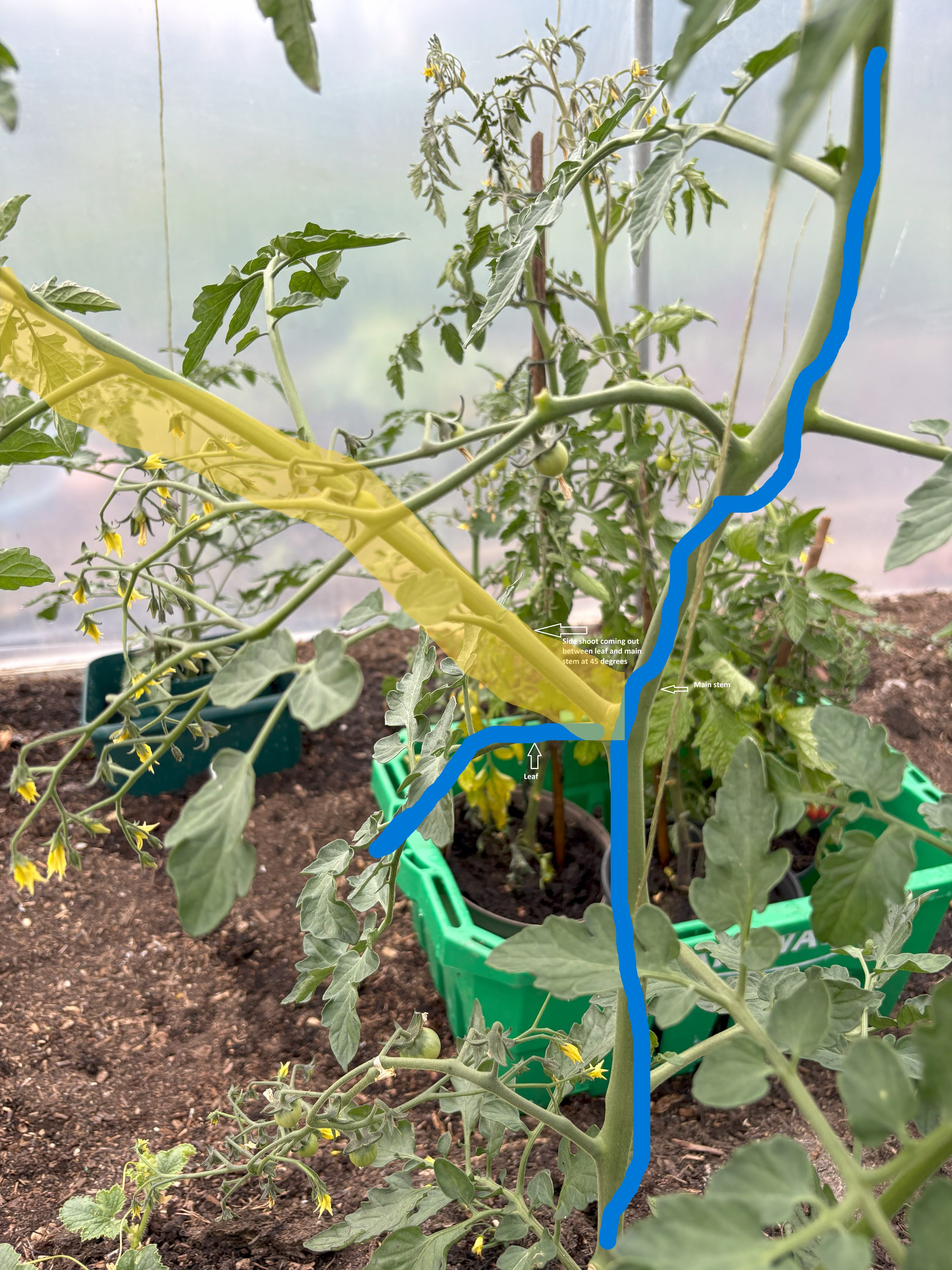
Between the stem and the leaf is a shoot in yellow growing out at 45 degrees. This is the side shoot and is the one we need to take out and you can just pinch it out or cut it.
It seems like such a waste. You can leave them on but it becomes much harder for the tomatoes to get enough sunshine and you can get a lot of leaf and shoot growth. We are trying to balance out leaf growth with large harvests.
However, we can turn this shoot into another tomato plant - oh yes!
Pop it in some water - a clear container will allow you to see when roots have developed.


Now we can produce tomato plants quicker than sowing from seed, I think these roots developed in two weeks, and this means that we can plant them out later than our first tomatoes but they should keep on producing after our first are starting to run out of steam. I really only do this with cherry tomatoes as they continue to ripen into late autumn undercover unlike larger toms which need more sunshine. The best varieties to do this with are Sungold and Honeycomb, both orange cherry tomatoes.
There are people who keep varieties of tomato alive over winter through rooting side shoots and then have very early plants to put out undercover in spring. That’s dedication.
Happy gardening and side shooting.
Joy