
Growing vegetables for beginners: July 2026 week 2
Heat, heat, drought, more heat, and keeping the beds full.


I know better than to go away on holiday in June or July, but I did it anyway. A fortnight in France in a heatwave. I came back to find my blueberries had shrivelled, some of the peas had frazzled and the lettuce had bolted. The aubergines, however, have partied.
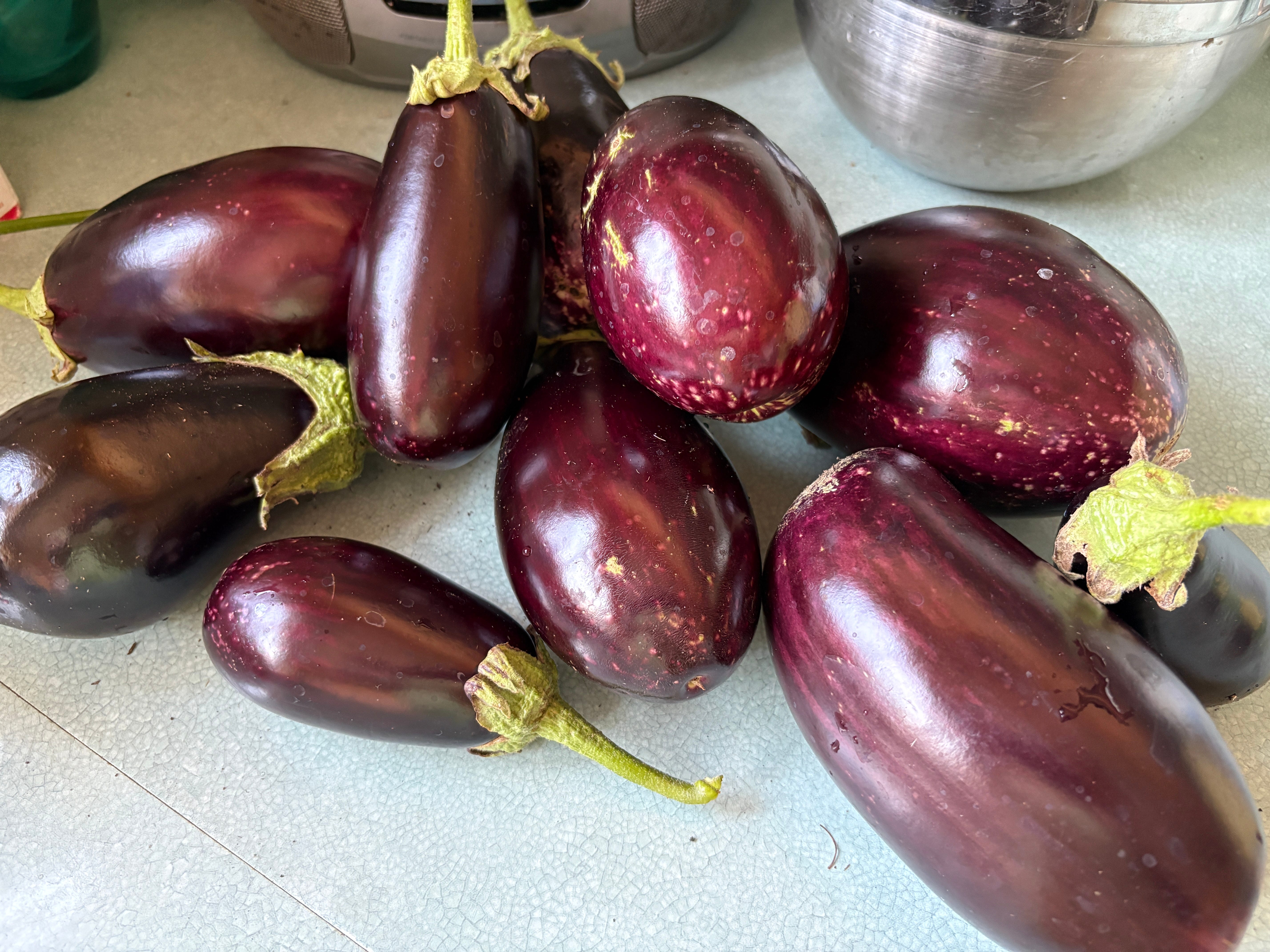
Aubergines are £2.50 from Riverford, and as that is what I compare my vegetables to, I have seven that are about their size so £17.50+ of aubergines. There are a couple that are smaller so I haven’t included them but these are organic with very low miles to the plate. The plants were £7.99 each so £16 in total which means that in one harvest, I have covered the costs of the plants. All the rest is sheer profit and there are plenty more to come.
Managing in a drought/heatwave
At this time of year, watering is always an issue in terms of time needed. As I look out of the window onto 30+ degrees of heat, there is a reasonably strong wind and that will exacerbate the moisture removal from plants.
There are a couple of things we can do to ameliorate this heat and reduce the time spent watering. Here are my top three:
Give plants a LOT of water directly onto the soil. I have beds divided into blocks that will be about 1.2m by 1.2m. I started this when I kept running out of fennel and had none left for January and February. I planted two blocks up with the idea that one was for before christmas and one after so that I had some food deep into winter. The blocks have stuck, but what I also know now is that one 12 litre watering can waters the block well and in a drought/heatwave I do two. This means that I am still only watering twice a week and by hand so that I can tell how much water I am using. Don’t get me started on people who stand around wafting a hose into the air.
Mulch if you can. I normally mulch over winter with compost but at this time of year I am using other materials - half-rotted leaf matter, Strulch and grass clippings. Use what you have - even weeds that have not yet gone to flower. This year I am also trying Farida Sober’s fermented grass mulch to see if it makes a difference. Her seed snails have revolutionised the way I grow some seedlings so she has earned my trust in trying something else out that I am not entirely sure about. It probably wasn’t the wisest choice to put the clippings on just before I went away and then expect someone else to water them, but there we have it.
Prioritise watering if really short of time. If 1 is high priority and 3 low, then Jerusalem artichokes are a 3 as are the sweetcorn at the moment, but my newly sown carrots are a 1 until they are established enough to cope. Plants that are near to maturity also need watering in order to swell the fruit/root/leaf, plus anything drooping. I also consider cucumbers a 1 because they contain so much water, winter squash can wait a few more days. Your soil may be different to mine, sandy, so you will need to work out the priorities on your plot. I will just mention that if runner beans are not watered enough they will drop their flowers and there will be no beans. You have been warned!
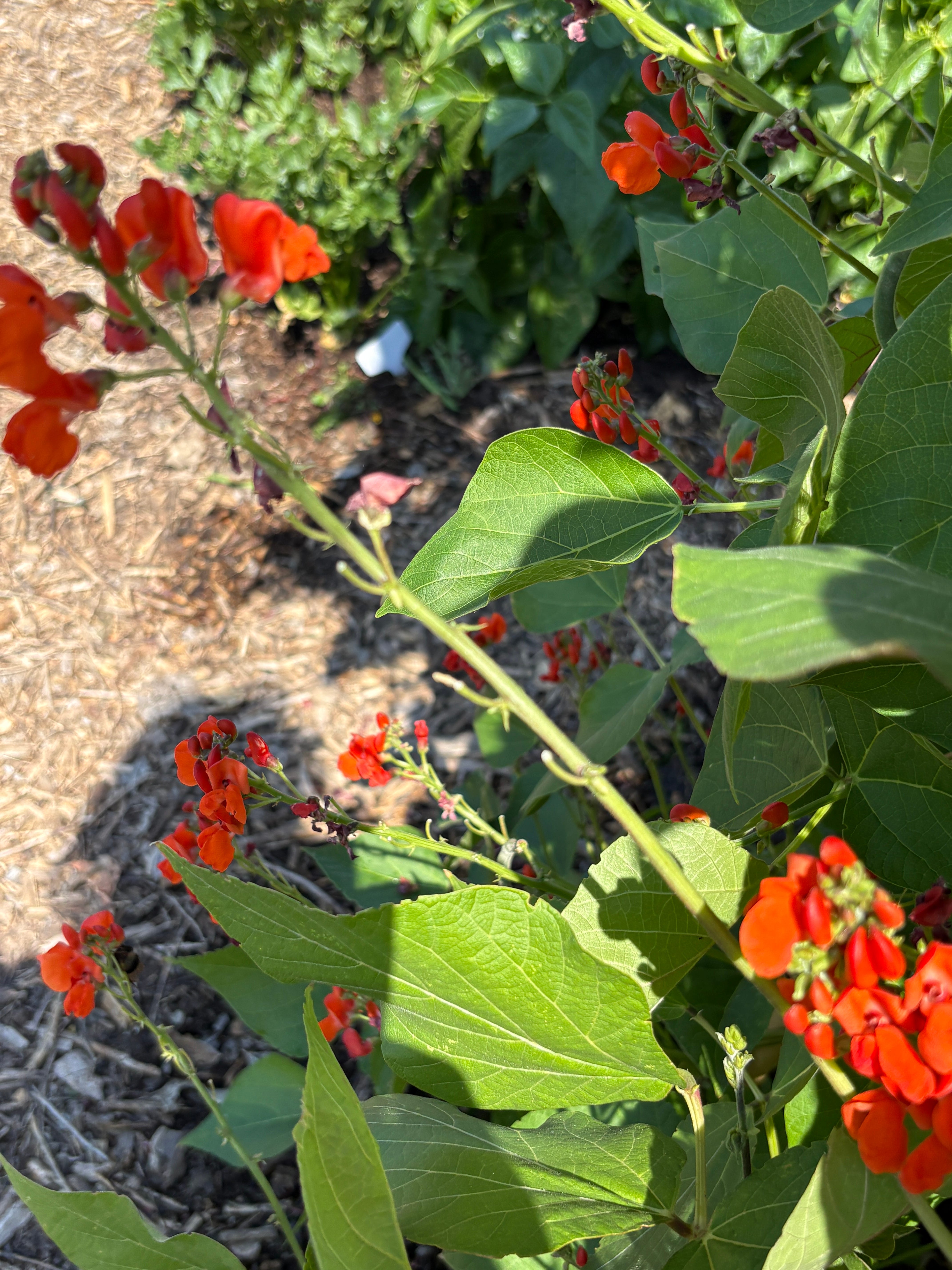
None of these tips are new but the three taken together do make a difference. The heat means that the fruit and vegetables are ripe and ready earlier and the harvesting period is not lasting as long as usual.
The flowers on courgettes, squash and cucumbers
The curcubit family have male and female flowers, and sometimes mostly male flowers. You can tell the difference between them because male flowers have long straight stalks and females have a slight bulge behind the flower which develops into the cucumber/melon/squash/courgette.


When the plants are stressed, they mostly send out male flowers. This often happens when you first plant them out because it can be too cold, but this year I suspect it is because they are not getting enough water in relation to the heat. Provide extra water and see if that changes flower production.
Extreme heat will cause the baby fruit/veg to wither, go yellow and drop off.
What are the flowers on your curcubits doing?
Keeping the beds full
We have special visitors to the site in September and I have been asked if I could keep the beds full. I said yes, but I had not counted on a heatwave and so now I am panicking a teensy weensy bit.
The course finishes at the end of October so we can’t plant the usual brassicas and winter crops and it is too hot to sow seeds in the polytunnel. So, fennel, chicory, more french beans, and I can’t believe it, but more cucumbers have been sown and are stood in shade for part of the day to help germination. Here’s hoping! The middle of August is really the cut off date for getting plants into the soil and growing on ready for September. I’m on countdown to that day.
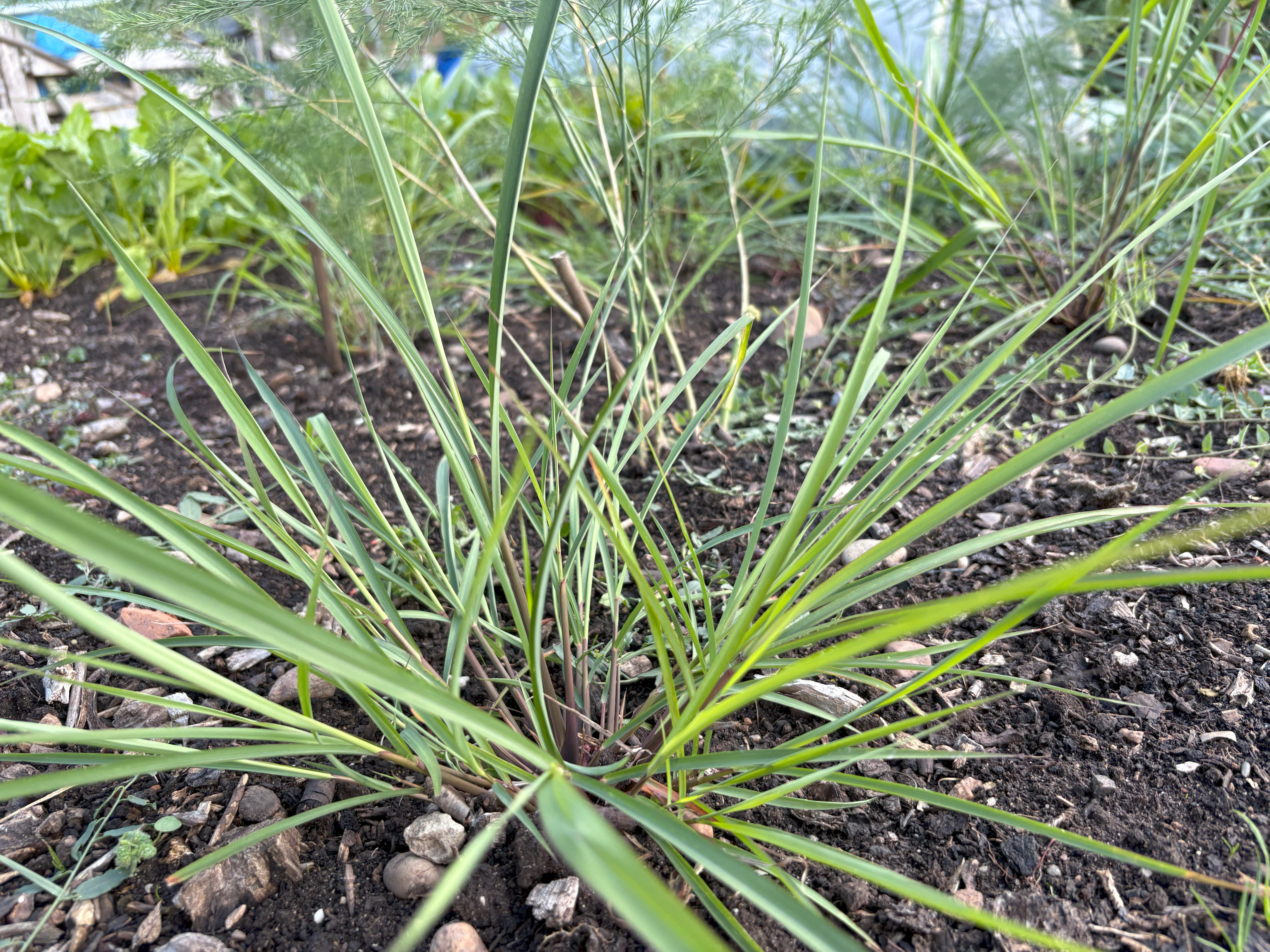
We did plant out lemon grass which is an exceptionally easy herb to grow and it does just as well outside as in a polytunnel. I have never managed to keep it growing over winter, so treat it as an annual. In the autumn, I chop it down, cut it up into small pieces and freeze on a tray and pop into a bag. I can then take spoonfuls out whenever I need them.
Get set up for more of the same weather over the next couple of weeks. Yes - I am watching the football, I scheduled this to be sent. 🫣
Happy gardening.
Joy