
Growing vegetables for beginners: week 1 May 2026
The wild flowers of Crete, how to have cucumbers for as long as possible and SLUGS!
The plot at the end of this week’s session.
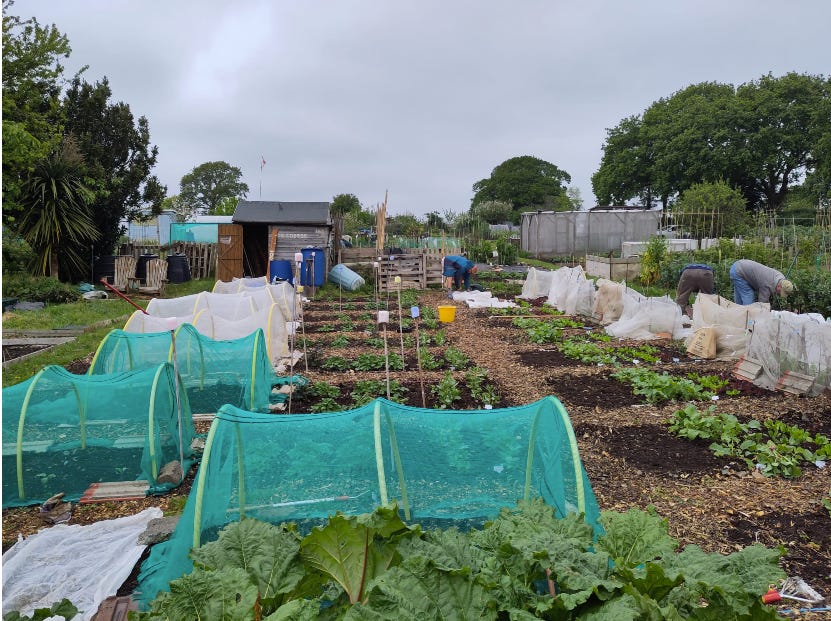
There are actually things growing!
I spent week in Crete last week with five days of wonderful weather and two not so much. On the way home I scrawled through my photos and realised I had more pictures of flowers than I did of other sight-seeingy things. I won’t subject you to them all but here are a few:


The plants are Glebonius coronaria or crown daisy, rocket, horned poppy, Lantana with its colour-shifting flower and a corn marigold and poppy. There were fields and abandonned plots full of each of these flowers, obviously in the Cretan climate they are all on the invasive end of spreading, but here in the UK they make rather more contained plants.
Slugs and snails
A helpful person offered me some slug pellets when I was on my plot because they had just bought a new tube and didn’t want to use the old ones - I have no idea why. I thanked them and said I didn’t use them - no, not even the organic ones. It was the end of a long afternoon of planting out, and I didn’t have the energy to explain what I do instead, so here it is.
๑ï Reduce as much as I can the hiding places whilst accepting it is not always possible to eliminate them. I say this as a woman with a whole bed of ‘weeds’ for biodiversity at the end of her plot which is a veritable city of slugs and snails.
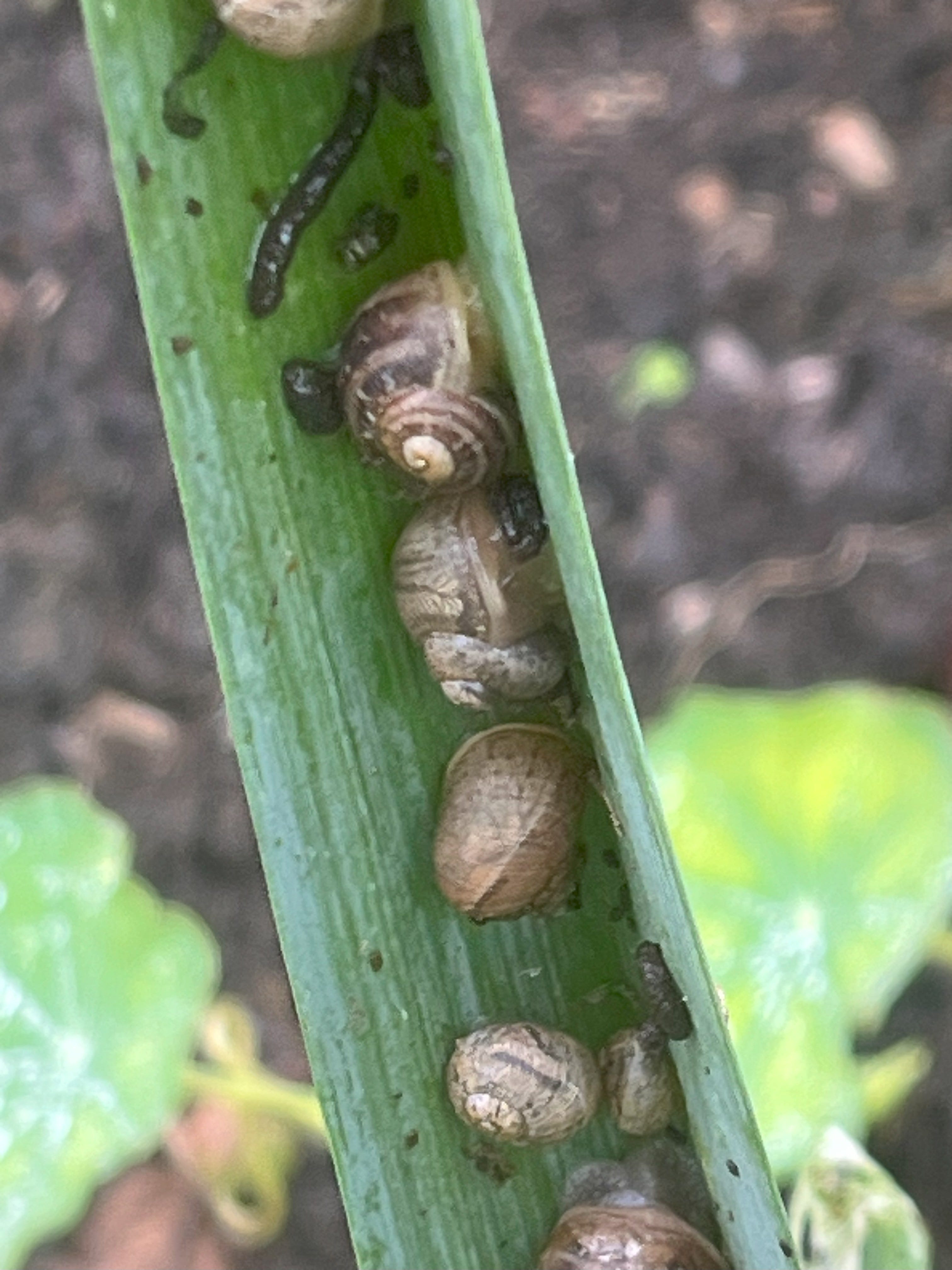
๑ï I use a weather app to see what the next fortnight’s weather will be. If there is going to be a lot of rain or dampness, I don’t plant the seedlings out but wait. This might mean I need to pot them on, or give them a very diluted seaweed feed if they are showing signs of nutrient deficiency, usually through yellowing leaves.

This next fortnight isn’t great and our beetroot really needs to go out. Decisions will need to be made.
๑ï Plant out sturdy seedlings that have been well-grown with little stress and strong root systems. Slugs and snails will make a bee-line (slowly) for weaker plants.
๑ï I place my earliest crops such as radish, lettuce and spinach as far away from beds which might be hiding slugs and snails, near to chipping paths, as possible. I have always found that the beds with brassicas in are also a great place for these critters to hang out.
๑ï I protect most of my transplants with fleece, enviromesh, clear plastic bottles used as cloches and copper rings until I think the plant is big enough to withstand an attack. I have had these plastic bottles for over twenty years.
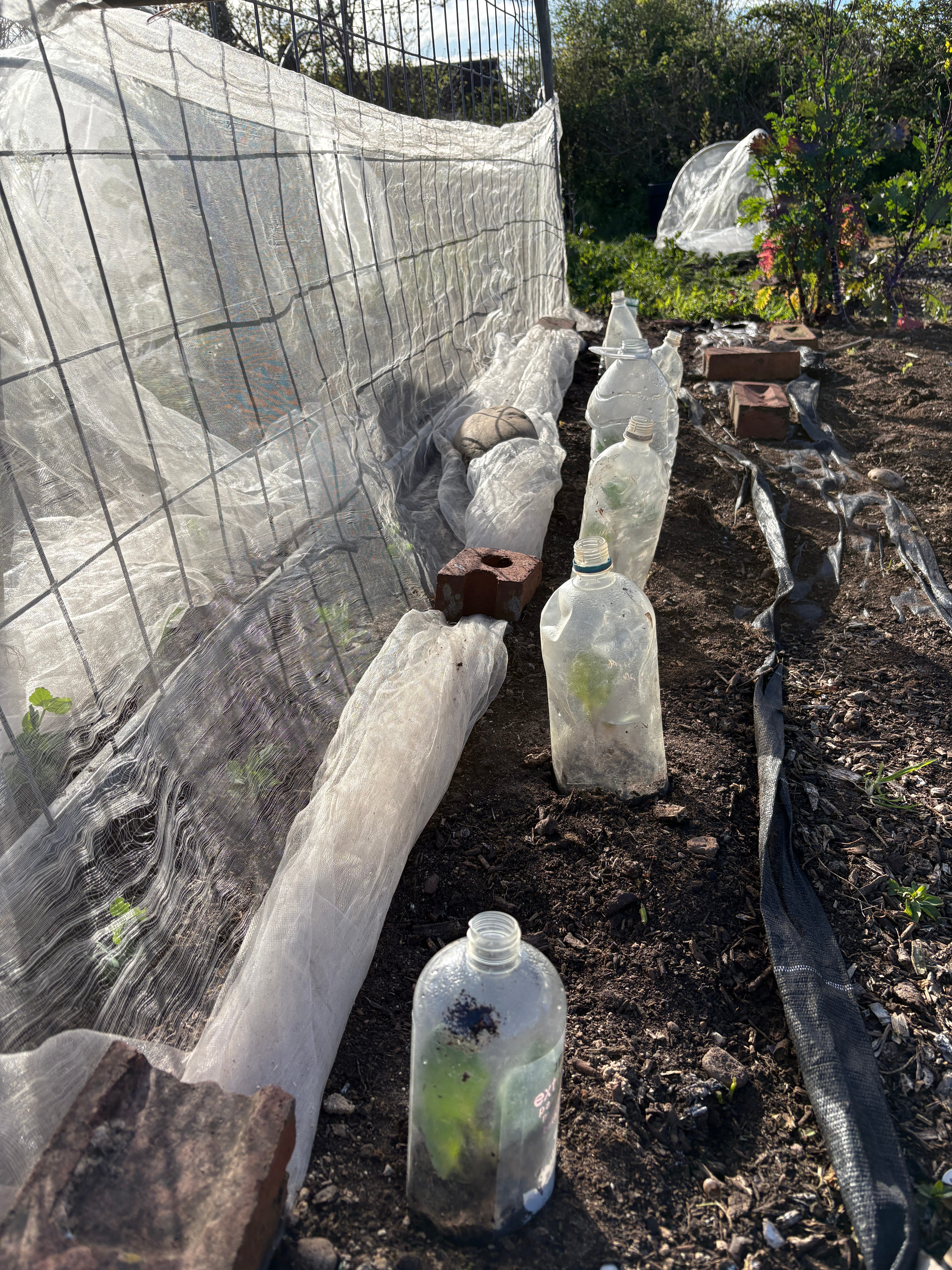
๑ï I check for slugs and snails under the bricks and stones that hold fleece down and under fleece and mesh, and remove those that I find.
๑ï I lose crops - not as many as you might think. Last year I planted out my celariac because I was off on holiday and didn’t think they would survive being in the tunnel in small modules. I didn’t protect them and they didn’t survive the holiday. You can’t sow celariac again, it takes too long to germinate and grow, but other crops such as carrots you can.
The RHS have a cheery piece of research that shows that most barrier methods don’t work - eggshells, wool etc. Although the jury is out on copper barriers, the image they show won’t work because the leaves are hanging outside the barrier. In this instance two rings need to be joined to make one larger one so that everything is contained inside the ring. I also think copper rings only work if they are put in place when the seeding is transplanted, not after the snail meal.
And so to cucumbers . . .
We’ve been bombarded with headlines about food prices going up, shortages of salad ingredients on the shelves and a lack of carbon dioxide used in packaging for fresh foods recently. All of which makes me glad I grow as much as I can, but sometimes it is not as simple as making one sowing of a crop and then sitting back and letting the magic happen.
This then, is how I manage cucumbers to have them from the end of May to the end of October. I don’t eat many cucumbers over winter as I am sick of them at that point. I have a polytunnel and greenhouse and a small heated window sill propagator. Jump into this list when I use the resources you have.
As early as possible (April) I buy a grafted cucumber and plant it in the polytunnel or greenhouse. These are vigorous plants and usually produce cucumbers by the end of May. I really like small cucumbers at this point but take whatever the garden centre has to offer.
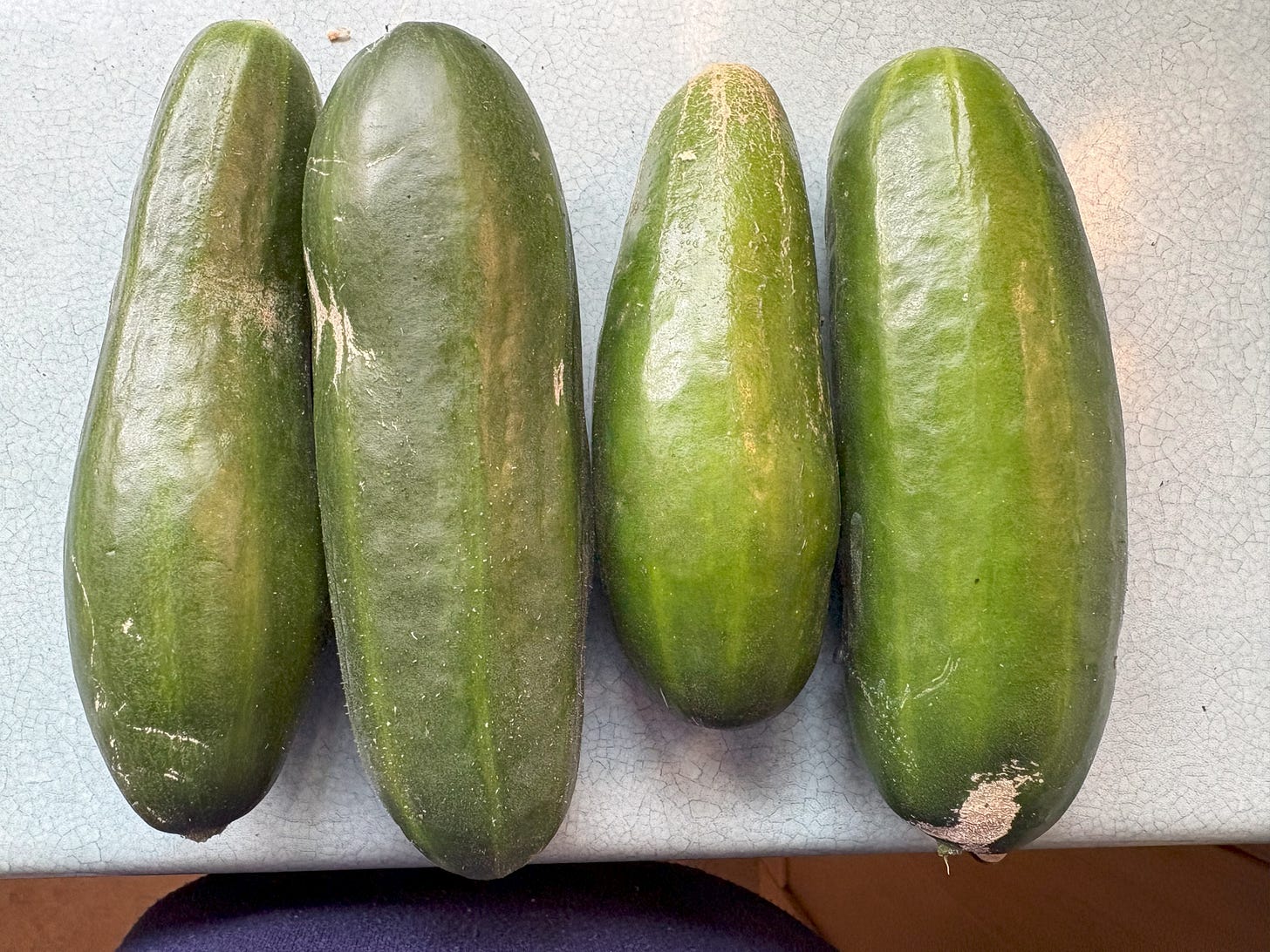
A grafted mini cucumber variety called Mini Stars grown in 2025. The first week of April, I sow indoor growing cucumber seeds using the heated propagator, usually Carmen. These are F1 seeds so only five in a packet but honestly, two plants are enough unless you can get through more than one cucumber a meal. This year I transplanted these into the polytunnel on the 29th of April and expect fruits around the middle of June. The grafted plant will still be producing cucumbers but may be slowing down.
The first week of May I sow my outdoor cucumbers, usually some form of Marketmore. They have slightly bumpy skins but are a good, reliable cropper. These will go outside on a frame at the end of May and start producing at the beginning of July. I usually have six plants, but for the two of us that is too many and we start eating cucumbers as snacks and at meal times. The Carmen cucumbers will be slowing down now.
The first week of June I sow an old heritage variety, Crystal Lemon. It needs to be peeled but has a crispness unlike any other cucumber and by the time this is producing fruit, mid to end of July, we are ready for a change. These plants will continue producing into October depending on the weather, but definitely towards the end of September.
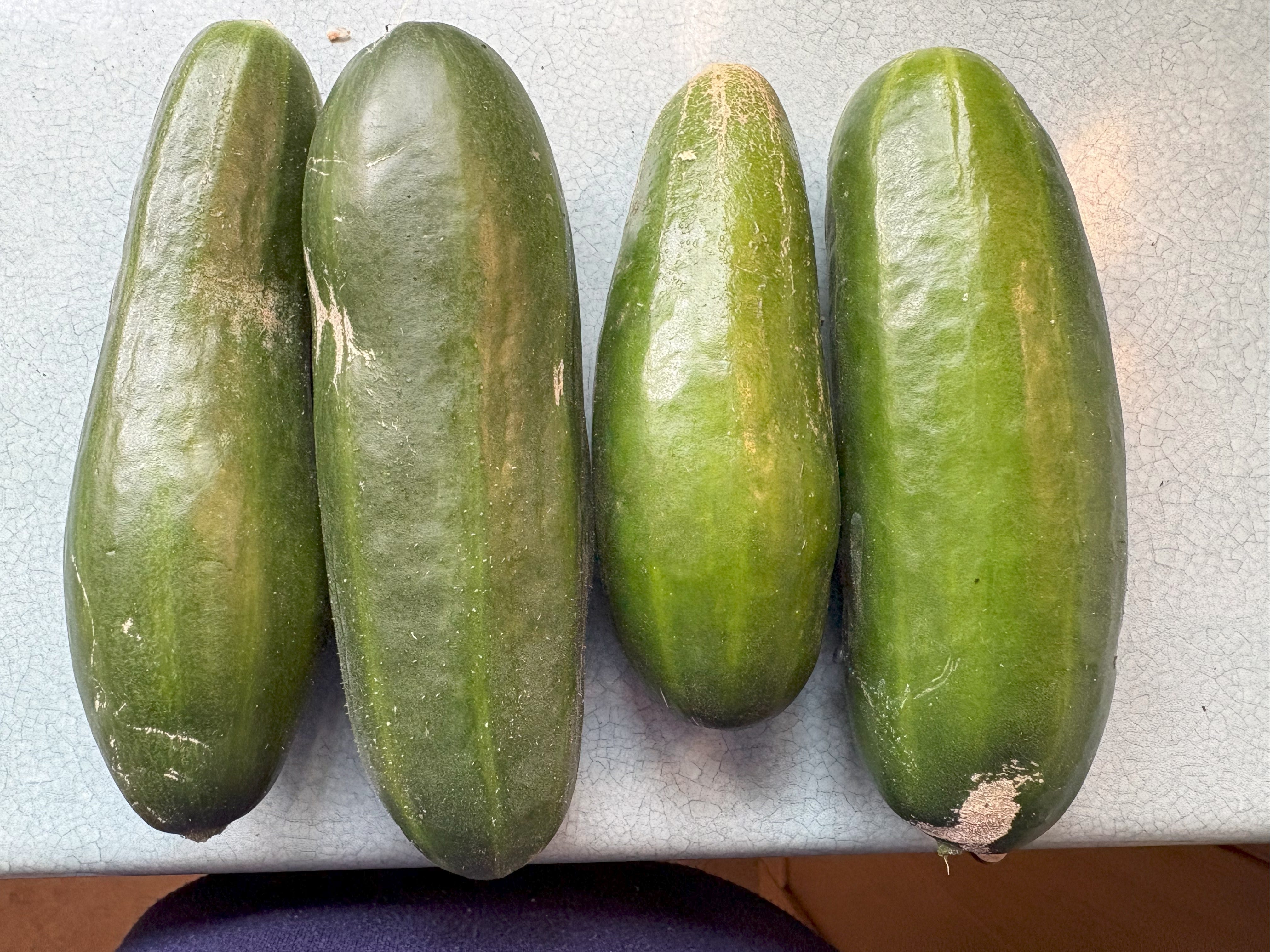
And at this point we are truly fed up with cucumbers and never want to see another one!
Happy cucumber growing and gardening.