
Growing vegetables for beginners: July 2026 week 5
A mammoth planting out session, the winning veg for a drought and heatwave, using the sowing timetable in different ways and the list of Joy.
Instead of the plot this week, pictures of us!


I am afraid that there were more courgettes and lettuce to plant out, but we have a film crew coming and I promised the beds would be full!
First, let’s concentrate on what has done well so far this year - my top three.
French beans 🏆
These have been a winner this year, and I suspect every hot year. I don’t eat runner beans but if someone asked if it was worth growing them at present, I would say no. Stick to french beans going forward. I have been watering one set of runners every day and it has so far made little difference to the setting of the beans. The french beans, however, have been prolific.
We have grown two varieties, both dwarf. The first to go in was a green one, Annabel but then as a succession, some of the group sowed a purple dwarf bean called Purple Mistik (some seed companies end the made-up spelling of Mistik with a c, others a k). Just look at the difference in habit between the two beans.


Far more leaf cover on the Annabel beans and the beans are under the leaves meaning you have to forage for them.
For the Mistik, Suttons Seeds say, ‘Elevates the beans above the foliage, making them easier to spot and harvest.’ It’s true. The leaves are small and sparse, so I will be interested to see how long they produce beans for. The catalogues say June to October but are not clear about whether we need another sowing for that to happen.
Sweetcorn 🏆
We have grown Earlibird but it really is early this year. We sowed it on the 19th of May and harvested on the 2nd of August when it was tender and sweet, 105 growing days. And best of all, we beat the rats and badgers to it.
To test whether a cob is ripe, look for brown tassels, peel back the leaves and see if the kernels are pale yellow, as opposed to creamy white and then dig your nail into one kernel. If the juice is a milky white, they are ready. If it is clear it is too early or they have gone over.


Frass is a polite way of saying insect poo.
Cabbage: Greyhound 🏆
I don’t think we have ever grown such large, clean heads of cabbage and that is down to the timing of the planting and weather conditions regarding slugs and snails. Let’s be honest, here: it’s hit and miss! If they are not watered now, they seem to be standing quite well and so people do not have to have three enormous cabbages sitting in their fridges.

These have had 98 days growing, and could, I think, have been harvested earlier. Sown on the 22nd of March and planted out 4 weeks later under Enviromesh, they are show-winning cabbages.
We had the first red cabbage harvested last week, 30th of July and they took 131 days to grow to maturity.
What’s in your top three - and you are not allowed tomatoes or cucumbers, or god help us, courgettes! They must be unexpected. Tell me all.
Using a sowing timetable
Last week I shared my sowing timetable that I have built up over years. See in the post below.

This week I want to think about some of the different ways I flex it, particularly if I am going on holiday.
It goes without saying that the first changes you need to make are those that suit your situation and tastes. I am on the south coast of the UK, in zone 9a, so if you know your zone, you can move the dates, back if you are further up North (most people are) or even forward if you are in the south east.
But there are other ways to flex this chart. When I worked, I only sowed seeds once a month so in the middle of the month, I sowed all the seeds for that month. When I retired, I moved to fortnightly and then weekly.
If I’m going away on holiday, the easiest thing to do is to stop sowing seed for a few weeks before I go away and then do a large seed sowing of everything I missed when I come back. This is possible if you can find someone to water your seedlings whilst you are away. If watering them is not possible, everything needs to be in the ground and that takes a lot more work.
I know that for most seedlings it takes 4 weeks to get them to a size when I can plant them out so I need to stop sowing 4 weeks before going away, perhaps 5 if finding time to plant out will be tricky.
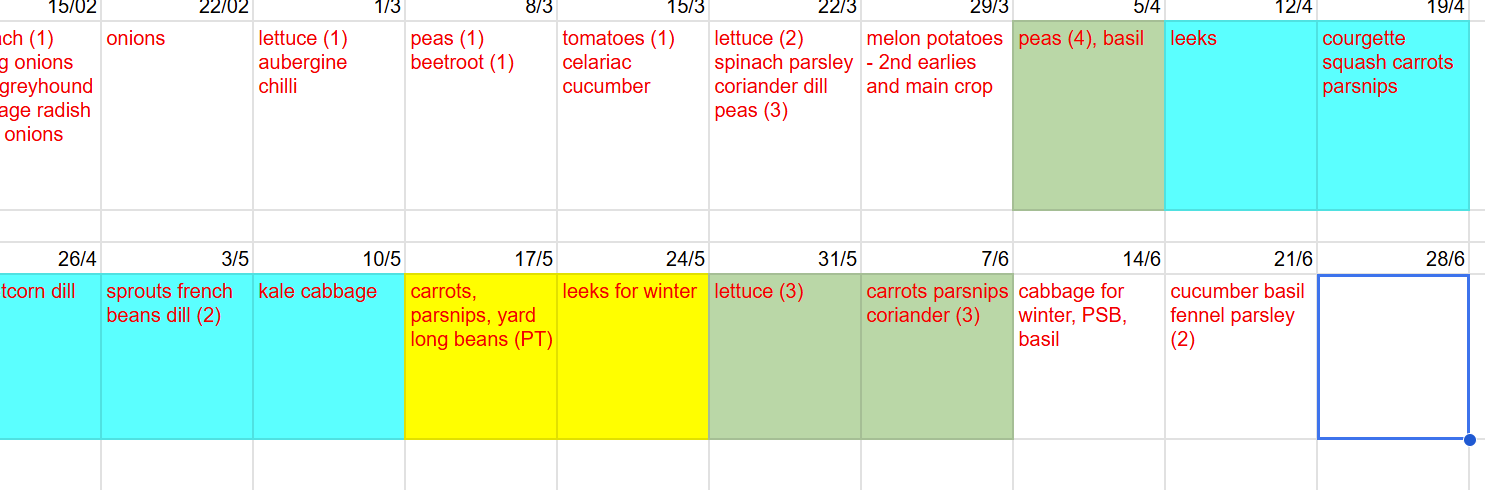
The following description is only if you don’t want to miss out on any sowing.
Yellow is when I am on holiday. The first blue week is when I will stop sowing so that actually means six weeks of no sowing (blue and yellow). In the green week 5/4 I will sow the seeds for that week and the first three blue boxes - it’s a lot - but not the carrots and parsnips as they need constant moisture and are direct sown. Many of these seedlings will need protection from the cold and/or slugs and snails when planted out and so I use fleece.
When I get back I will sow the blue boxes from the 3/5 and the yellow boxes to include carrots and parsnips over the next two weeks and the green boxes so that I am all caught up.
An easier way do do it would be to stop sowing and just pick up when you get back, ignoring all the seeds you haven’t sown. I have been known to do this many a year.
The other option is to only go away before the 15th of February and after the first week of November. I have also been known to do this.
The longer I have been growing, the harder I find it to go away for any length of time during the peak growing season.
The list of Joy
What I want to know is, who wouldn’t want one of these to wash their cherry tomatoes.
And more cats. My plot backs onto houses and the cats can get through to the plots at the side of the fence. I now have a tuxedo cat sleeping amongst the Jerusalem artichokes.
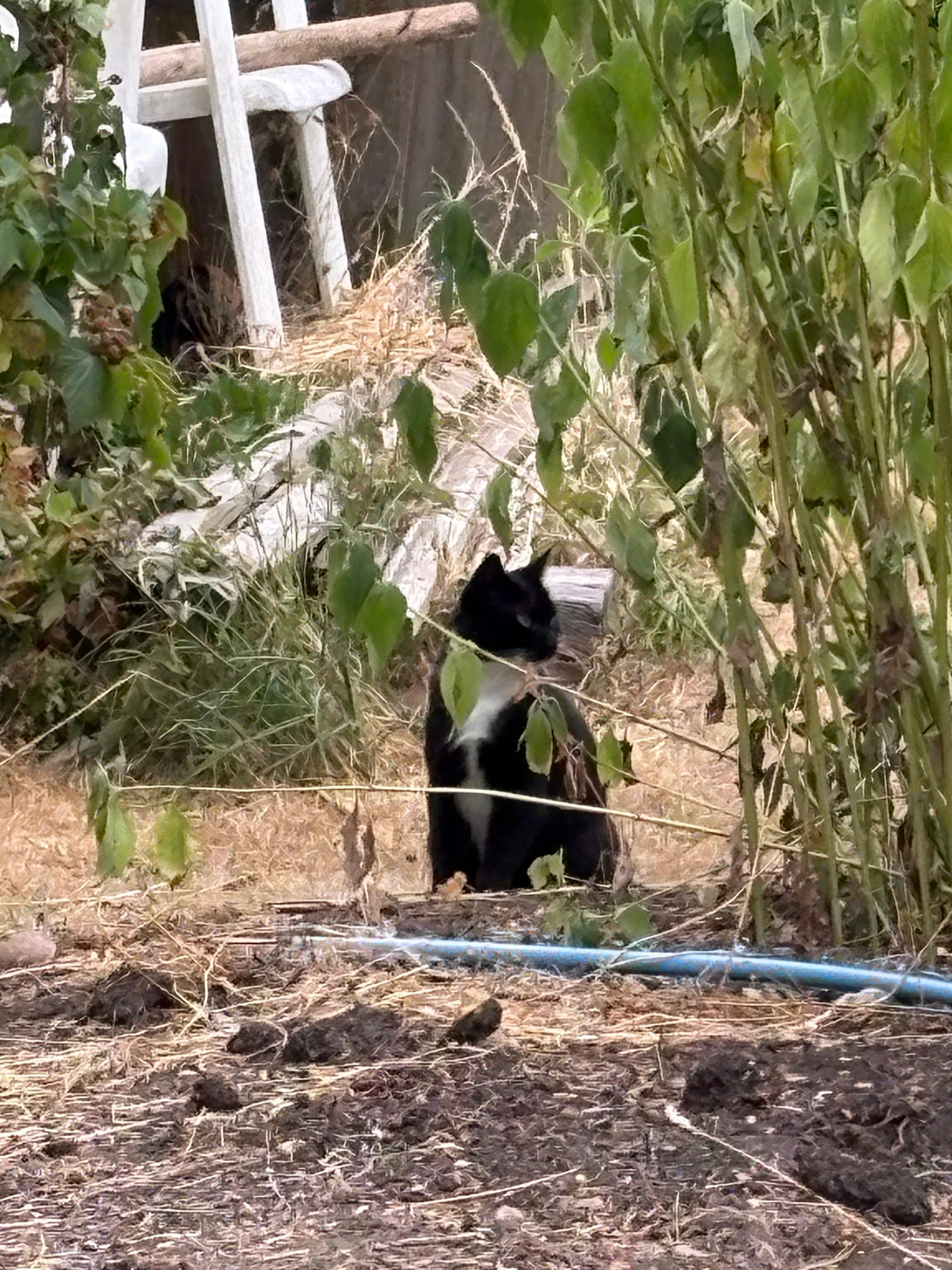
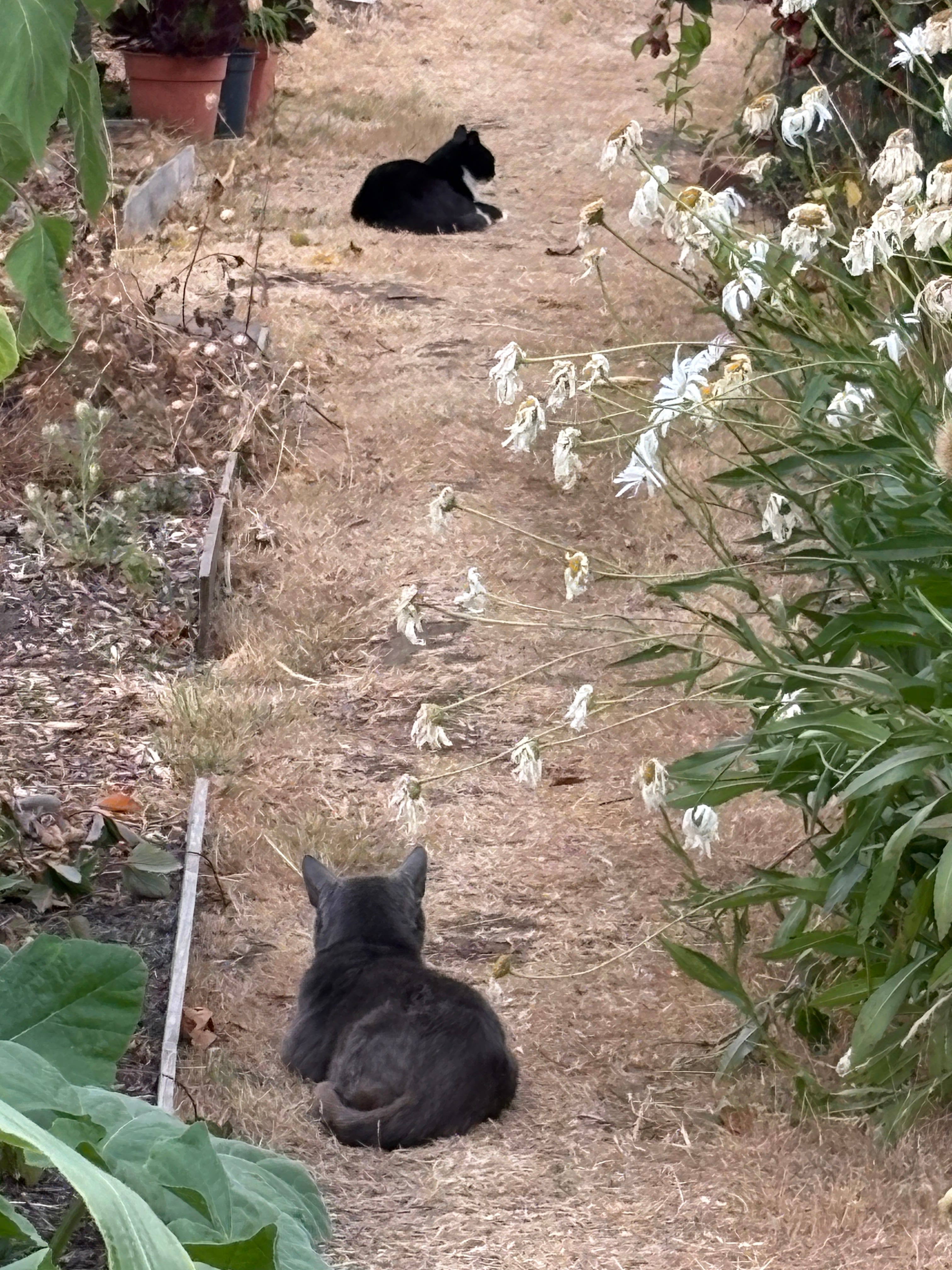
And a standoff betweenTuxedo Cat and a little grey one I have never seen before. It’s a peaceful standoff. (Sigh) If only we could resolve territorial arguments by pretending to sleep at a respectful distance.
Has anyone tried a hot bed? I would love to and these look easy enough apart from the lids.
Happy gardening and I do believe there is another heatwave approaching.
Joy